
North Sea crude prices have surged to record levels as disruption in the Strait of Hormuz continues to constrain global oil supplies despite a ceasefire between Washington and Tehran.
Forties Blend, the benchmark for immediate delivery, climbed to nearly $147 per barrel on Thursday, surpassing levels seen before the 2008 financial crisis.
Physical barrels from British waters are trading at a significant premium to the $97 June Brent futures price, reflecting mounting concerns over supply shortages.
The rush for cargoes has disrupted trading activity, with Brent contracts for difference temporarily halted after prices breached exchange thresholds.
President Donald Trump said: “Oil will very quickly begin flowing again,” but added that Tehran was “doing a very poor job” of allowing vessels through the strait.
Reform UK has responded to the market turmoil by calling for increased domestic oil and gas production.
At a press conference in Aberdeen on Wednesday, the party’s energy spokesman Richard Tice urged ministers to approve outstanding North Sea extraction consents, including the Rosebank and Jackdaw fields.
Mr Tice said: “With everything that’s going on in the world at the moment, has there ever been a more important time to understand the importance of having our own secure supply of energy.”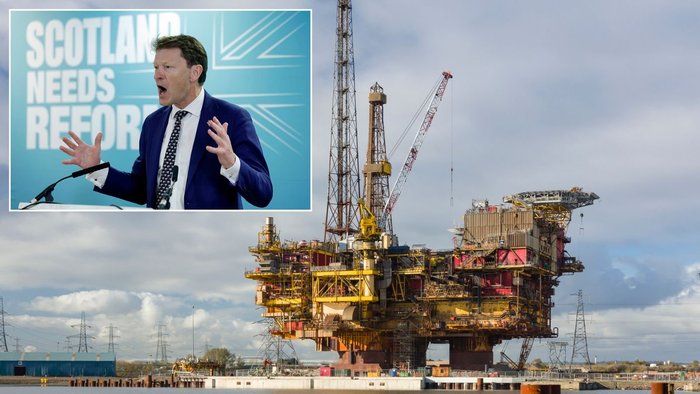
The Jackdaw project remains unresolved following a 2024 Supreme Court ruling requiring emissions from burned fuels to be considered in planning decisions.
Environmental campaigners later secured a Court of Session ruling in Edinburgh in January against both the Jackdaw and Rosebank developments.
Since the ceasefire announcement on Tuesday, only a limited number of vessels, mainly linked to Iran, have passed through the Strait of Hormuz.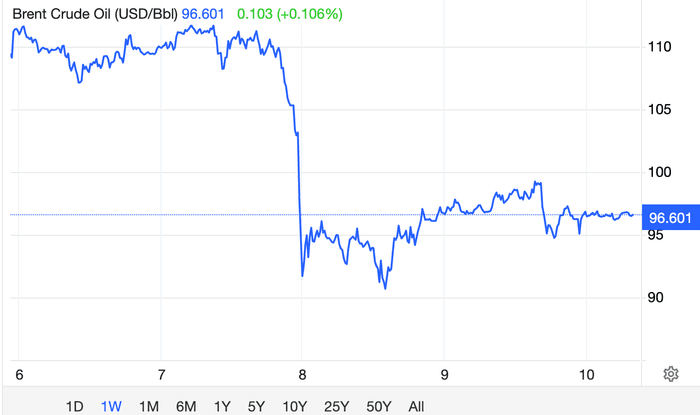 Goldman Sachs said exports through the route have fallen to just eight per cent of normal levels.
Asia is particularly exposed, with around 80 per cent of its oil supplies passing through the strait.
Saudi Arabia has added to supply concerns after confirming that attacks on its energy infrastructure reduced output capacity by 600,000 barrels per day.
Damage to the Khurais and Manifa fields has removed roughly five per cent of the country’s usual production.
Dennis Kissler, senior vice-president at BOK Financial, said: “It will take 20 days to correct the logistical problems even when the strait opens.”
Mr Tice also outlined what he described as a “critical four-point plan” to strengthen the UK’s energy position.
This includes scrapping the Energy Profits Levy and renaming the North Sea Transition Authority back to the Oil and Gas Authority.
He said Norway drilled 49 new wells last year while Britain drilled none, adding that the gap was “frankly a humiliation.”
Mr Tice also called for the introduction of onshore fracking to maximise domestic resource extraction.
However, Robert Palmer, deputy director of campaign group Uplift, rejected the proposals.
Mr Palmer said: “New drilling will do nothing to improve the UK’s energy security,” adding that much of the UK’s remaining North Sea oil is exported rather than used domestically.


