
Business leaders have accused Labour of risking the exclusion of young people from the labour market after publishing sweeping proposals to restrict zero-hours contracts.
Consultation documents released on Tuesday outlined plans for a 12-week reference period that would determine the guaranteed hours employers must offer workers.
Industry leaders warned the timeframe could distort normal working patterns because it may capture unusually busy periods such as the Christmas rush.
The criticism comes as youth unemployment has climbed to 16.2 per cent, its highest level in more than a decade according to Office for National Statistics (ONS) figures.
Around 1.2 million workers currently hold zero-hours contracts, while approximately 2.7 million people work 16 hours or fewer each week.
Under the Employment Rights Act, businesses would be required to provide contracts with guaranteed hours to workers on zero-hours or low-hours arrangements.
Labour’s consultation asks whether workers regularly employed for up to 20 hours a week should qualify for the protections, while ministers are also seeking views on increasing the threshold to as much as 40 hours.
Once the reference period establishes a worker’s typical hours, employers would be expected to offer equivalent shifts throughout the remainder of the year regardless of fluctuations in demand.

The proposals, which were originally championed by former deputy leader Angela Rayner, would also require employers to provide reasonable notice for shift allocations, alterations and cancellations.
Employers who cancel, move or shorten shifts with less than four weeks’ notice could face compensation costs worth up to 80 per cent of the worker’s lost earnings.
John Foster of the Confederation of British Industry described the proposed 12-week reference period as “wholly unworkable” and warned the changes “have the potential to reshape working patterns right across the economy”.
He said the measures “risk reducing work opportunities, making overtime non-viable and discouraging employers from offering shifts that many workers actively want”.
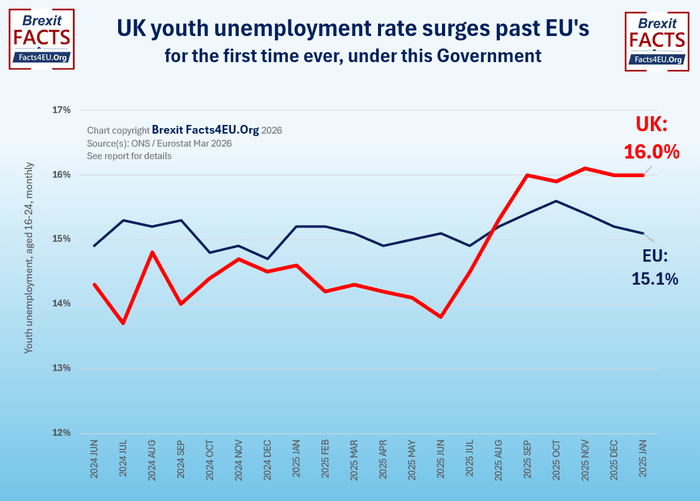
Shadow business secretary Andrew Griffith said: “This consultation risks ending the role of seasonal and temporary workers in the labour market.”
Mr Griffith added that young people would suffer most from the changes at the same time ministers claim they are trying to reduce the number of people outside education, employment or training.
Neil Carberry of the Recruitment and Employment Confederation said he was disappointed the Government had “drifted so far from the original proposals agreed by businesses and unions”.
Kate Nicholls, chairman of UKHospitality, urged ministers to extend the reference period to 26 weeks because hospitality businesses would be particularly affected by the reforms.
She warned: “There is a danger that over-regulating flexible work actually increases work instability, rather than decreasing it.”
Helen Dickinson, chief executive of the British Retail Consortium, said retail remained a vital entry point into employment for hundreds of thousands of young workers each year.
She said: “With over a million young people out of work or education, Government cannot afford to get this wrong.”
Ben Willmott of the Chartered Institute of Personnel and Development warned that excessively burdensome regulations could encourage employers to rely more heavily on self-employed contractors and fixed-term arrangements.
He said the changes could ultimately create more precarious forms of employment rather than reducing insecurity in the labour market.


