
Indiana’s House Republicans have unveiled a draft congressional map that would dramatically strengthen the GOP’s position across the state—potentially giving Republicans a shot at winning all nine districts and flipping two Democratic seats in next year’s elections.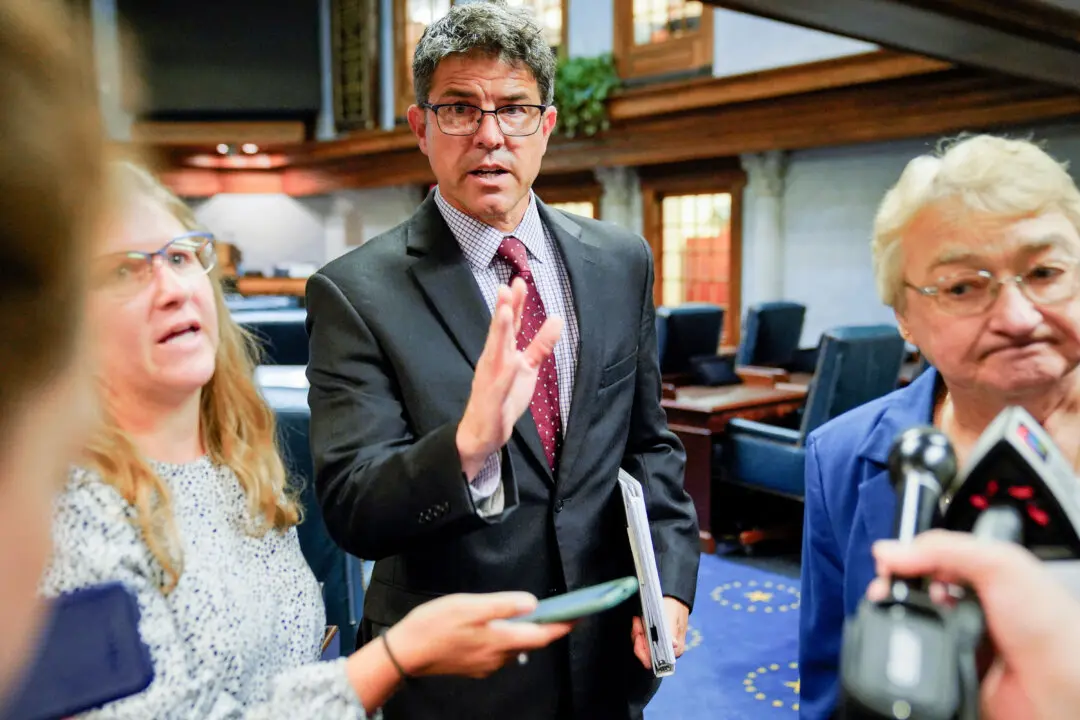
The proposal significantly reshapes Indiana’s two Democratic-leaning districts—the 1st and 7th, currently held by Reps. Frank Mrvan and André Carson. Under the new lines, Marion County, home to Indianapolis, would be split into four districts, bolstering GOP advantages in the 6th and 9th districts represented by Jefferson Shreve and Erin Houchin. Parts of northwest Marion County would also be shifted into the 4th District, represented by Rep. Jim Baird.
Mrvan’s 1st District would see a major overhaul, absorbing large portions of the solidly Republican 2nd District, currently represented by Rudy Yakym. Many of these areas heavily backed Republicans in 2023, with former President Donald Trump crushing Kamala Harris in Fulton County by more than 50 points.
Taken together, the changes would weaken Democratic support in Indianapolis and surrounding communities while injecting more GOP voters into the 1st and 7th districts—both currently held by Democrats.
A Multi-State Redistricting Showdown
The Indiana fight is part of a wider, mid-cycle redistricting battle sparked by Trump, who earlier this year urged Texas to redraw its districts to secure five more Republican seats in the 2026 midterms. Midterms typically deal losses to the party occupying the White House, as seen for Trump in 2018 and Biden in 2022.
California fired back by putting its own redistricting measure on the ballot, aiming to shift district lines toward Democratic advantage. Voters approved the initiative on Nov. 4.
Trump has encouraged other Republican-led states to follow Texas’s path. He reportedly told Indiana Gov. Mike Braun that he “must produce” on redistricting or be “the only Governor, Republican or Democrat, who didn’t.”
Following that pressure, House Speaker Todd Huston announced that Indiana’s House Republicans would meet on Dec. 1 to consider a new map, with Senate President Pro Tempore Rodric Bray saying the state Senate would review any proposal on Dec. 8. Still, Bray has previously acknowledged that he does not currently have the votes needed in the Senate to pass a mid-cycle redistricting plan—leaving the effort in doubt.
Meanwhile, the White House has repeatedly pushed the plan to Indiana lawmakers, with Vice President J.D. Vance visiting the state twice to rally support.
Democrats have blasted the proposal, calling it a blatant attempt at gerrymandering to help Republicans avoid losing control of the House in 2026.
Pipe Bomb Threat Heightens Tensions
Tensions escalated even further the day before the draft map was released. Indiana state Sen. Jean Leising reported that her home had been targeted with a pipe bomb threat that she blamed on “D.C. political pundits” advocating for redistricting. She thanked local law enforcement for securing the situation and vowed, “‘I will not cave’ on opposition to redistricting.”
Leising later posted a critique of the map, calling it “entirely political” and saying it failed to prioritize Indiana residents.
She is not the only one facing backlash. Several Indiana lawmakers who have declined to back Trump’s push for mid-cycle redistricting have recently reported being victims of swatting incidents at their homes.


