
Oprah Winfrey has decided, five years too late, that the world needs her clarification of one of the most consequential interviews of the decade.
In a Vanity Fair interview this week, she revisited the moment she asked Meghan Markle whether she was “silent or silenced” and claimed she was only seeking clarity.
The timing is revealing. In 2021, Oprah gave Harry and Meghan an almost entirely unchallenged platform to level serious accusations against the Royal Family, including the suggestion of racism within its ranks.
There was no meaningful pushback, no demand for evidence, and no serious scrutiny of claims that were clearly intended to inflict reputational damage.
Now, as the Sussex brand shows clear signs of collapse, Oprah is revisiting that interview to explain herself. One is left to wonder whether she has come to regret the side she chose.
What is certain is that the original broadcast was never serious journalism. It was validation presented as inquiry. Meghan was given a global stage on which to present her version of events almost entirely unchallenged. Oprah supplied sympathetic prompts and expressions of astonishment that encouraged viewers to accept grave allegations before any evidence was offered. The claim that conversations had taken place inside the Royal Family about Archie’s skin colour was left hanging with almost no follow-up.
Days after, while visiting a school in Stratford, Prince William was asked by a reporter: “Is the Royal Family a racist family, sir?” He replied firmly: “We’re very much not a racist family,” underscoring the personal and institutional strain the allegations placed on the monarchy.
Meghan’s real achievement was never convincing the public she had suffered. It was convincing large parts of the media that her version of events deserved to be believed before it deserved to be examined. Allegations became headlines before they became facts. There were serious consequences to this approach.
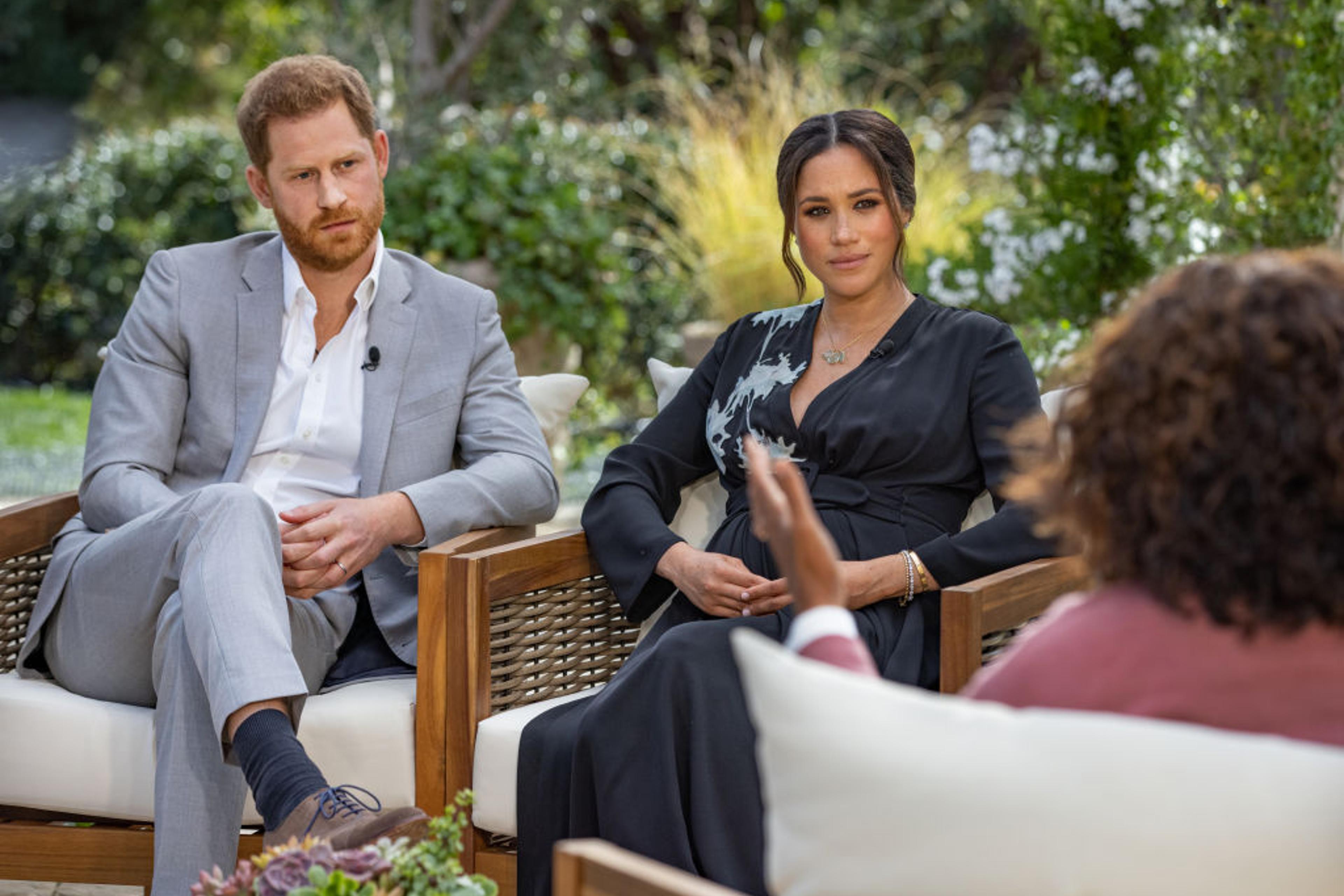
A private family dispute was turned into a global morality play about race, power and institutional prejudice. Around the world, the British monarchy was portrayed as morally compromised. That framing owed as much to Oprah’s unquestioning presentation as it did to Meghan’s claims.
Subsequent events have steadily undermined the interview’s credibility.
Several claims were later challenged or qualified, and key details around headlines, finances and security were disputed.
Prince Harry himself later drew a distinction between unconscious bias and outright racism — a clarification that received far less attention than the original broadcast. By then, the damage was already done.
The interview also revealed something important about Meghan herself. Long before Hollywood lost interest, she discovered that grievance could be turned into a brand.
Every perceived slight became content. Every setback became proof of persecution. Victimhood was no longer just a personal story — it became a commercial strategy. For a while, it worked. The Oprah interview delivered worldwide sympathy and multi-million-dollar deals. Streaming platforms and publishers queued up for access to the couple’s narrative. Meghan was hailed as a brave truth-teller taking on one of the world’s oldest institutions. But grievance has a built-in limitation: it requires an audience prepared to stay permanently outraged.
That audience eventually moves on — especially when those claiming oppression live in extraordinary privilege while continuing to monetise the same complaints. Commercial partners expect results. The Spotify deal ended years ago. Other projects failed to generate the impact once anticipated. Reports of weak sales for Meghan’s lifestyle brand point to a growing gap between early hype and current reality.
This is why Oprah’s latest intervention feels less like clarification and more like reputation management. She wants the public to remember the emotional power of the interview while forgetting the absence of real scrutiny. Without Oprah’s endorsement, it would have been just another celebrity confessional. With it, the interview became a global indictment of the monarchy.
Oprah conducted one of the softest major interviews in recent memory on allegations of considerable public importance.
Meghan, for her part, showed how personal narrative can be used as both shield and weapon. She turned contested claims into accepted wisdom across much of the media, while treating any demand for evidence as further cruelty.
For years, critics were expected to prove their case, while the burden of proof rarely fell on those making the accusations.


