
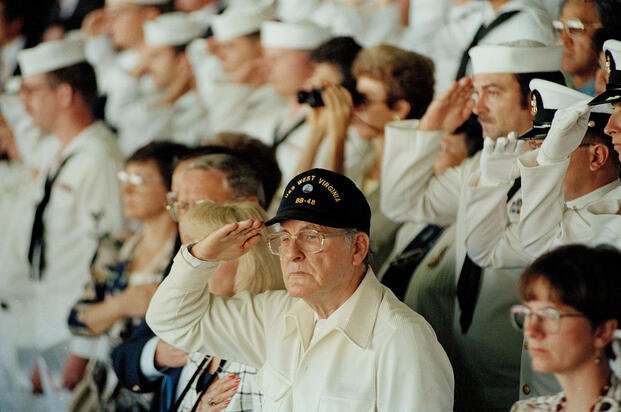
HONOLULU (AP) — For generations, the annual remembrance ceremony at Pearl Harbor has been anchored by the presence of those who lived through the morning of December 7, 1941. Their handshakes, their stories, their quiet strength — all of it brought the history to life.
This year marks a tender milestone: only 12 survivors are still alive, all over 100 years old, and for the first time, none are able to make the heartfelt journey back to Hawaii.
Yet instead of dimming the remembrance, their absence has only made the nation’s gratitude shine brighter.
Kimberlee Heinrichs, whose 105-year-old father Ira “Ike” Schab had to cancel his trip due to illness, said it best: “The idea of not having a survivor there… it hurt my heart in a way I can’t describe.” Her words echo what many feel — a deep reverence for a generation that carried its memories quietly while carrying America forward.
Honoring a Sacred Morning
The ceremony still begins, as always, with a moment of silence at 7:55 a.m., the exact time the attack began. Fighter jets sweep overhead in the solemn “missing man formation.” Wreaths are laid. Sailors salute as ships pass the USS Arizona Memorial — a gesture of respect that bridges past and present.
Over the decades, the number of survivors attending has gently dwindled. Two thousand came for the 50th anniversary. Only two attended last year. Their physical presence may be thinning, but the meaning they carried with them remains unshakeable.
Many who returned year after year did so with lightness — laughing with old friends, posing for photos — even as memories of fire, smoke, and loss lived close beneath the surface.
In 2023, survivor Harry Chandler shared vivid recollections of raising the flag as planes roared overhead, of rushing to help the wounded, of hearing trapped sailors knock desperately for rescue. “I can still see what was happening,” he said softly. He passed away the following year — but his stories did not.
Learning From Those Who Lived It
Pearl Harbor has long meant different things to different people. But for the men who were there, one message often rose above the rest: honor the past so the future can be wiser.
“Be prepared,” Chandler urged before his passing. Others returned simply to pay respects — to fallen shipmates, forgotten heroes, and the thousands who served with dignity.
Lou Conter, the last survivor of the USS Arizona, attended as long as his health allowed. “It’s always good to come back,” he once said. “To give them the top honors they deserve.”
Passing the Torch
As the number of survivors grows smaller, a new sense of responsibility has emerged among younger generations.
Historians have preserved nearly 800 oral histories. The Library of Congress now holds interviews, letters, photos, and diaries from more than 500 survivors — most available online, accessible to anyone who wants to learn not just the facts, but the humanity behind them.
Families are stepping forward, too. Organizations like the Sons and Daughters of Pearl Harbor Survivors continue sharing stories in schools, parades, and communities. They’ve even welcomed great-grandchildren of survivors, eager to carry the torch.
“When they’re all gone, we’re still going to be here,” said group president Deidre Kelley. “And it’s our intent to keep the memory alive as long as we’re alive.”
A Legacy That Won’t Fade
Though time has carried away the voices of many who lived that December morning, their courage remains woven into the nation’s memory. Their stories — once spoken beside the harbor — now travel through classrooms, museums, family gatherings, and digital archives.
Pearl Harbor may slowly lose its eyewitnesses, but the gratitude, lessons, and quiet heroism they left behind continue to guide the generations that follow.
Their legacy isn’t disappearing.
It’s being passed on — hand to hand, heart to heart.


