
Not long now until Andy Burnham is expected to replace Sir Keir Starmer as Prime Minister – two weeks on Monday.
And yet still so much uncertainty remains about what his plans are.
I am struggling to see why Labour has brought in a politician to improve how to communicate the Government’s message who appears so nervous about meeting the Press.
Mr Burnham’s first interview since he won the Makerfield by-election and became the presumptive Prime Minister was with radio presenter Andrew Marr on Thursday night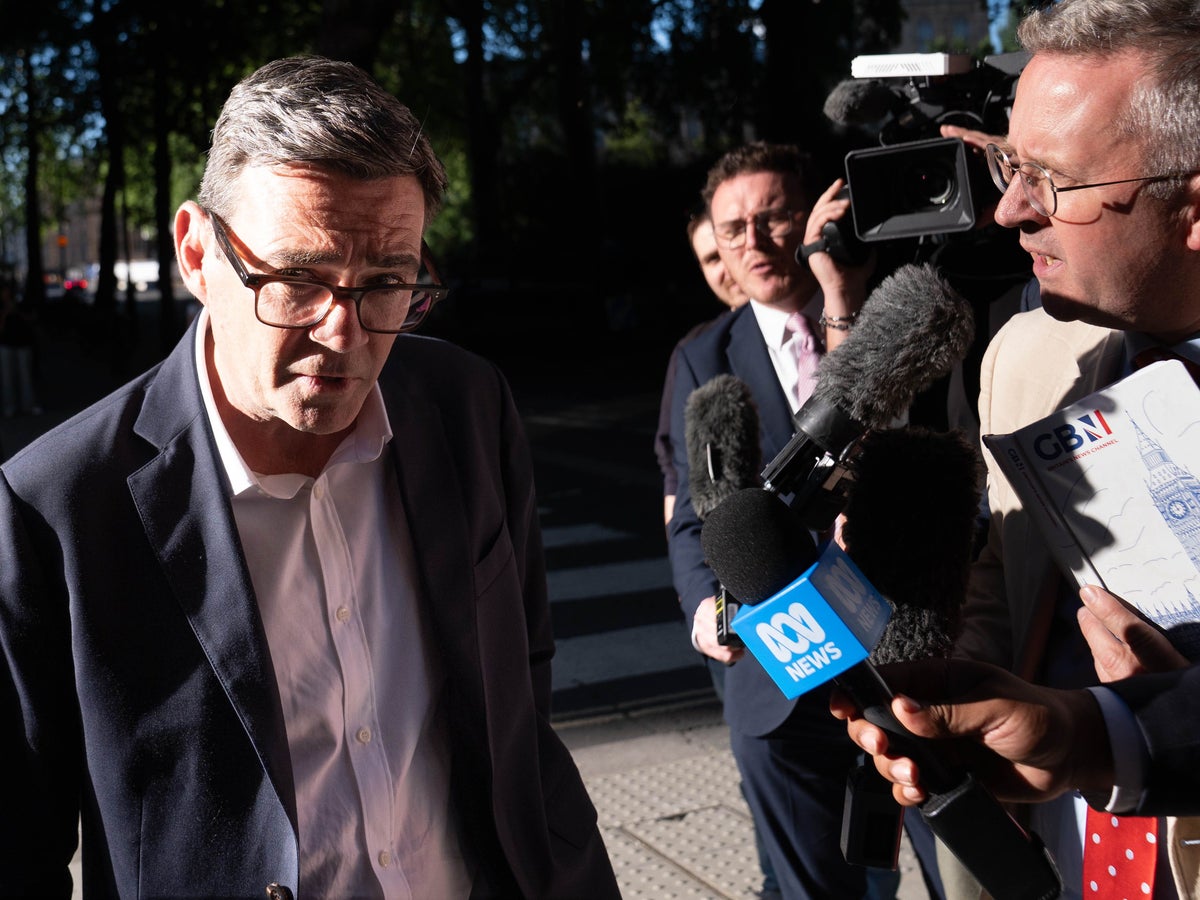
It lasted 15 minutes and has been picked apart for any indication of what a Burnham premiership might bring.
Mr Burnham ruled out “making “crude” cuts to Britain’s welfare bill – presumably worried about a backlash from the party’s supporters – preferring to cut it in a substantial way, and said he would fund the defence investment plan.
He also reiterated his commitment to stick to Labour’s 2024 manifesto promise not to raise either income tax, employee National Insurance or VAT, but hinted that there was “some room for movement” to raise some taxes.
The former Greater Manchester Mayor also intends to devolve powers to the regions of the UK, away from Whitehall, to encourage a greater sense of “place” among communities which too often feel overlooked by civil servants and politicians in London.
So far, so good. But critics have been saying for some time that not enough questions were asked of Labour before the party won its landslide in July 2024.
Yet the last general election looks like a detailed examination of policies compared to the coronation of Mr Burnham, who has been able to approach his arrival in No10 with little real scrutiny.
Part of the problem is the absence of a challenger, although former Armed Forces minister Al Carns is mulling whether he will stand.
Few think he can get the 81 MPs required to stand, though his friends tell me he wants to trigger a debate on the party’s future.
Say what you like about the Tories, but when they changed leader – as they have done six times in the past decade – at least they let members have a say, with 16 regional hustings at the leadership contest in 2019 and 12 hustings when it happened again in 2022.
I am old enough to remember when Gordon Brown replaced Tony Blair as PM in 2007 without a challenge – and it was widely seen then as ill-serving a Prime Minister who came to office with apparently little idea of what to do.
Like then, Mr Burnham looks set to replace Sir Keir Starmer in No10, having not been required to test his ideas and policies against a rival.
His supporters will say this is a good thing, as it avoids the party looking divided and the risk of his commitments being dragged leftwards as he competes for votes in hustings.
But it also means that his policies are a blank canvas on to which many are projecting their ideas.
This won’t matter as long as Mr Burnham’s policies stay within the tramlines of the 2024 general election manifesto (in which Mr Burnham played no part).
However, if he starts to produce policies, like wealth taxes or increases to VAT, income tax or National Insurance to pay for his plans, then the pressure to go to the country with an early general election will become unbearable.


