
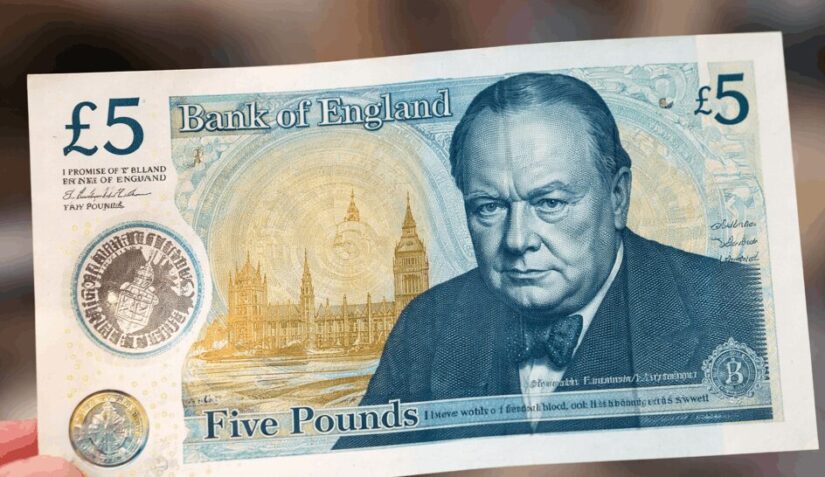
Government officials urged the Bank of England to replace Winston Churchill with LGBT+ and ethnic-minority figures on British currency, according to newly emerged correspondence.
The Office for Equality and Opportunity, a Cabinet Office division headed by Bridget Phillipson as minister for women and equalities, wrote to the Bank’s chief cashier during last summer’s consultation period, it has been revealed.
Civil servants argued that the high-profile Britons currently appearing on banknotes presented an “incomplete picture of national identity”.
“Historical figures can powerfully anchor public memory, but have historically reflected limited dimensions of British identity,” the letter stated.
Officials pushed for “greater representation of women, disabled people, ethnic minority communities and LGBT+ individuals,” arguing this “would send a strong signal of progress and recognition.”
The disclosure has sparked a political row, with Alex Burghart, the shadow chancellor of the Duchy of Lancaster, accusing ministers of working behind the scenes to remove iconic figures from currency.
“Labour tried to deny any involvement in the cancellation of Winston Churchill and other British heroes. But government officials have been caught red-handed conspiring with the Bank of England to remove them from our banknotes,” Mr Burghart said.
He added: “Banknotes should feature the greatest Britons the historic figures that unite our country. They shouldn’t be chosen on the basis of Labour’s equality laws.”

Ministers dismissed the collusion allegations, insisting that civil servants participated in the consultation through standard procedures.
A Government spokesman noted that an identical approach was taken during the 2013 banknote review under the previous administration.
The Cabinet Office correspondence also proposed that future banknote designs could highlight “historically under-represented groups whose contributions to the UK have been overlooked.”
Civil servants suggested exploring themes around social reform, civic action and education, while considering which imagery would connect with communities throughout Britain.
Among the specific recommendations was HMT Empire Windrush, the vessel that transported some of the earliest Caribbean migrants to Britain following the Second World War.
Officials described the ship as having “become synonymous and symbolic of the Windrush generation as a whole.”
They argued that featuring it on currency “could provide homage to an entire generation and their contributions, rather than one specific person.”
The suggestion follows Transport for London’s 2024 decision to rename London Overground routes, including lines honouring the Suffragette movement and Windrush generation.
The Bank of England has maintained that its decision to abandon historical figures stemmed from public consultation findings, showing majority support for nature-themed designs.
In March, the Bank ended more than fifty years of tradition by announcing wildlife would replace historic figures on future notes.
Officials also justified the change partly on security grounds, arguing that counterfeiters are becoming increasingly skilled at replicating human faces.
Last month, the Bank launched a public vote on 18 native British species that could appear on the next generation of £5, £10, £20 and £50 notes, with options spanning mammals, birds, amphibians, insects and fish.
That poll concluded last week, with Governor Andrew Bailey set to make the final selection.


