
Retirees are at risk of seeing their state pension payments “taken back through income tax” by HM Revenue and Customs (HMRC), analysts warn.
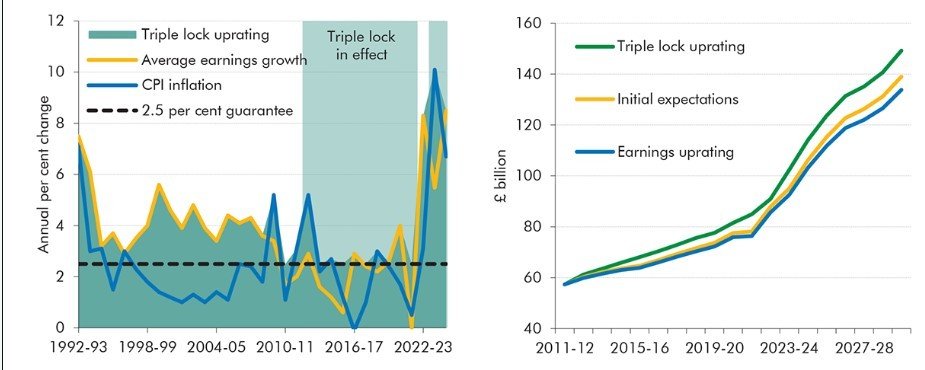
Retirement experts are sounding the alarm over the threat posed by fiscal drag to people’s state pension income thanks to annual triple lock hikes.
The latest phase of the Department for Work and Pensions’ (DWP) state pension age rise takes effect today, meaning millions of people across the UK must now wait until they turn 67 before they can access their state pension.
According to Derence Lee, chief finance officer at mutual society Shepherds Friendly, this development should prompt individuals to consider options beyond the state pension when preparing for their later years.

Mr Lee warns that the current state pension amount now sits perilously close to the frozen personal allowance threshold of £12,570, pushing growing numbers of retirees towards becoming income tax payers.
He said: “As the next phase of the State Pension age increase comes into effect, it also highlights a widening imbalance in the UK’s retirement system.”
The triple lock mechanism has been crucial in helping pensioners cope with elevated inflation in recent years, Mr Lee noted.
Under the triple lock, state pension payment rates are guaranteed to increase every year in line with either the highest of inflation, average wage growth, or 2.5 per cent.

However, he cautioned that if tax-free allowances remain static, recent pension uplifts could effectively be clawed back through taxation, hitting those dependent on state pension income for daily expenses particularly hard.
Mr Lee urged pensioners to verify whether they qualify for Pension Credit, a benefit designed to supplement weekly income for those with lower earnings.
The retirement expert shared: “Anyone approaching retirement should consider reviewing how ISAs, workplace pensions and diversified investments can help build a more resilient income stream.”
He emphasised that taking action now gives retirees the strongest opportunity to ensure their income keeps up with rising costs whilst maintaining financial security.
According to the expert, until clearer Government guidance on pension taxation emerges, proactive planning remains essential for those nearing retirement age.
Arjun Kumar, qualified accountant and founder of Taxd, added: “The fact that roughly a third of UK adults do not pay income tax is often used as a political lightning rod, but it is a direct result of a decade of policy.
“By maintaining a personal allowance of £12,570, the government has protected the subsistence income of the lowest earners, but it has also created a precarious narrowing of the tax base.
“When we break down the 40 million adults in the UK, the numbers tell a clear story: roughly 4.5 per cent are unemployed, another five per cent are on minimum wage, and about 2.75 per cent are pensioners relying solely on the state pension.”


