
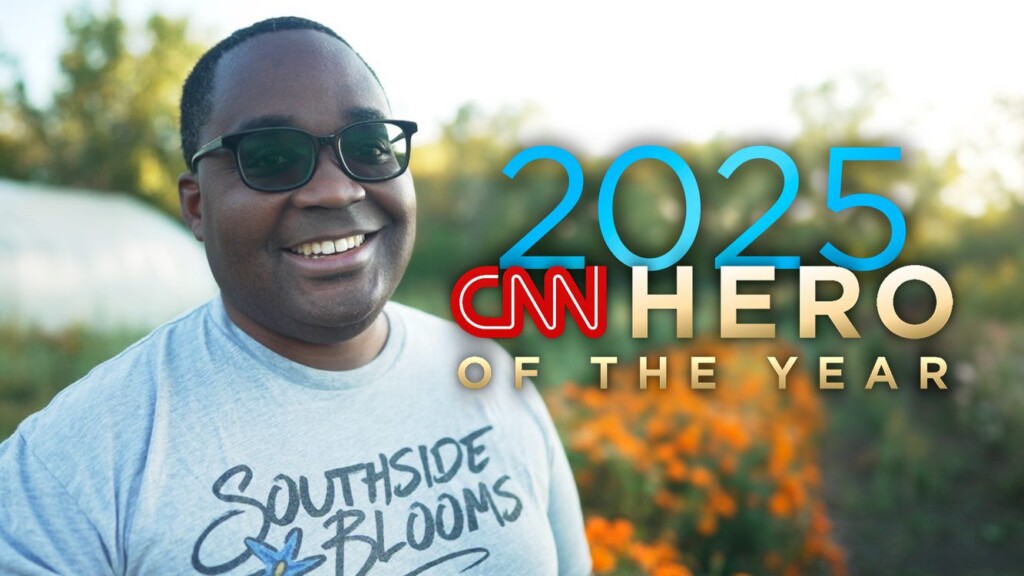
Quilen Blackwell and his wife, Hannah Bonham, have transformed forgotten land into living opportunity through two nonprofits, Southside Blooms and Chicago Eco House. Together, they are proving that beauty can be both a business and a bridge — connecting at-risk youth to meaningful work while challenging America’s reliance on imported flowers.
Their impact recently earned Blackwell the CNN Hero of the Year Award, along with a $100,000 grant to expand the mission. But for Blackwell, the real reward has always been watching young people rediscover purpose — and themselves.
Southside Blooms converts abandoned lots across Chicago’s South Side into eco-friendly, solar-powered flower farms. Local youth are hired to grow, harvest, arrange, and sell the flowers, gaining job skills, income, and confidence along the way. The blooms are sold through a nonprofit flower shop that serves customers across the city.
The idea was born out of both frustration and insight. When Blackwell, originally from Wisconsin, moved to Chicago after serving in the Peace Corps and enrolling in ministry school, he settled in Englewood — a neighborhood where nearly 40% of residents live below the poverty line. His first attempt at a social enterprise focused on growing fruits and vegetables, but strict regulations, contaminated soil, and water access issues made the model nearly impossible.
Then he stumbled upon a statistic that changed everything: more than 70% of cut flowers sold in the United States are imported, often from thousands of miles away.
“I thought, why are we importing flowers when we have all this land — and all this youth?” Blackwell told CNN. “Maybe flowers are the answer.”
Flowers, he realized, could thrive where other crops struggled. They required less soil remediation, connected people to nature, and carried symbolic power in a place often associated with hardship.
By 2021, Chicago Eco House had converted six vacant lots into sustainable flower farms. Today, Southside Blooms employs 25 young people, most between the ages of 16 and 25, and is preparing to open a second location on Chicago’s West Side.
“This is my life,” Blackwell once said. “My wife is involved. My kids are involved. Hannah is our lead florist. After we harvest, the flowers are processed in our shop and sold all across the city.”
For Blackwell, the metaphor is impossible to ignore.
“Some of the most beautiful flowers grow in the harshest conditions,” he said. “And that’s just like the people here.”
Beyond wages and work experience, the program offers something less tangible but equally powerful: belief. Belief that young people from underserved communities can succeed — when given the right tools, trust, and time.
“As long as they have what they need to grow,” Blackwell said while holding his CNN Hero award, “there’s nothing they can’t do.”
And like any true leader, he made one thing clear: this story isn’t about him alone — it’s about his wife, his team, and the young people who show up every day to turn empty ground into something alive.
On Chicago’s South Side, they aren’t just growing flowers.
They’re growing futures. 🌸


