
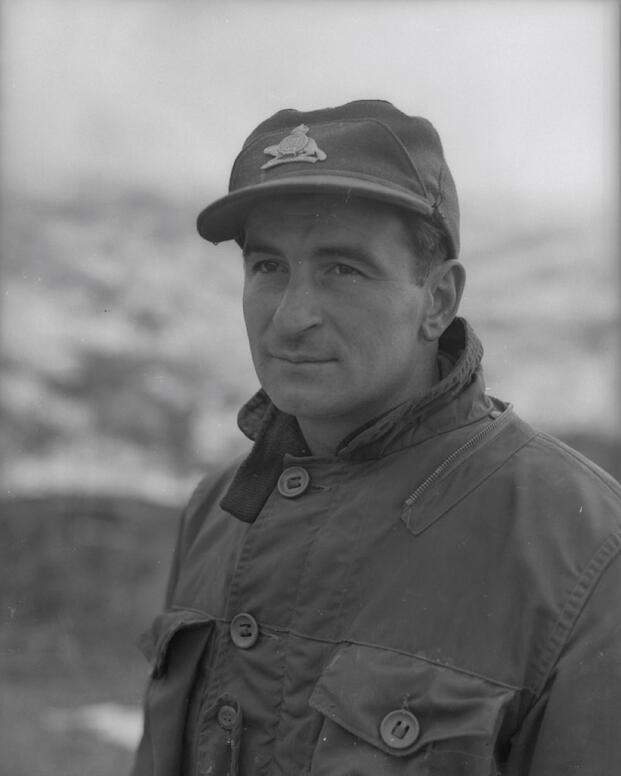
 Just after midnight on April 14, 1945, a 23-year-old Canadian sniper wearing an eye patch walked alone into the Dutch city of Zwolle. He carried two Sten guns, a bag of grenades… and the weight of losing his best friend moments earlier.
Over the next six hours, Private Leo Major convinced more than 1,000 German troops that a full-scale Canadian assault had begun. By dawn, the Germans panicked and fled the city—saving 50,000 Dutch civilians from an artillery bombardment scheduled for that morning.
Seven decades later, FC Zwolle soccer fans unfurled a giant banner honoring him as the “sole savior of Zwolle.” The city has never forgotten the one-eyed soldier who freed them with nothing but guts, fury, and unbelievable nerve.
A Fighter Who Refused to Quit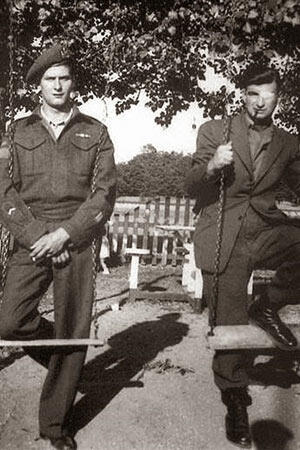
Born in Massachusetts to French-Canadian parents and raised in Montreal, Major grew up in a troubled home and eventually moved in with an aunt. In 1940, he enlisted—partly to prove himself.
He landed on D-Day with Le Régiment de la Chaudière and quickly became known for reckless bravery. Not long after arriving in Europe, he captured a German halftrack by himself.
Days later, a phosphorus grenade blinded his left eye. Doctors insisted he should be evacuated. Major refused—famously telling them a sniper only needs one good eye. He fought the rest of the war with an eye patch.
And the injuries didn’t stop.
During the Battle of the Scheldt in 1944, he single-handedly captured 93 German soldiers.
In 1945, a landmine broke his back, ribs, and ankles. Doctors declared his service over.
Major escaped the hospital a week later, hid with a Dutch family for nearly a month, and rejoined his regiment anyway.
The Night Zwolle Fell
On April 12–13, 1945, Major and Cpl. Wilfrid Arsenault volunteered to scout German positions before Canadian artillery leveled the city the next morning.
A German machine gunner ambushed them at the city’s outskirts. Arsenault was killed instantly. Enraged, Major charged the position and killed the gun crew.
Instead of returning to base, he pressed on alone into Zwolle.
What followed was six hours of chaos engineered by a single furious soldier:
- He fired bursts from different locations to mimic a large attack
- He threw grenades around the city
- He captured and disarmed German patrols who believed they were being overrun
- He coordinated Dutch resistance fighters, placing them at key points
- He held German officers hostage in a bar and convinced them thousands of Canadians surrounded the city
- He set the Gestapo headquarters on fire
By 4:30 a.m., German troops had begun retreating across the IJssel River. Zwolle was free.
At daylight, Major recovered Arsenault’s body and returned to his regiment. The planned bombardment was canceled, and Canadian troops walked into the city unopposed.
A Legacy That Outlived Him
Major rarely spoke of Zwolle, even to his family. His son only learned the full story when a Dutch official visited their home 30 years later.
Zwolle honored him as an honorary citizen and named a street Leo Majorlaan. His heroism is taught in local schools.
Major received the Distinguished Conduct Medal, making him one of only three soldiers in British Commonwealth history to receive the award twice. He earned the second during the Korean War by leading 18 scouts in a night raid that seized Hill 355 and holding it for three days against Chinese counterattacks.
Leo Major died in Montreal in 2008 at age 87. In 2020, Canada Post issued a stamp to honor the legendary “One-Eyed Ghost.”
Today, he is remembered as one of Canada’s greatest warriors—and the man who liberated a city by himself.


