
More than 1,500 passengers and crew died in the freezing waters of the North Atlantic after the “unsinkable” ship struck an iceberg during its maiden voyage from Southampton to New York.
The disaster reshaped maritime safety regulations forever, but it also left behind a heartbreaking mystery that continues to intrigue experts and the public more than 112 years later: If over 1,500 people died, why were so few bodies ever recovered — and why are none found at the wreck site today?
For decades, this question provoked speculation and theories. But thanks to oceanography, forensic science, and deep-sea missions, we now have clear, scientifically supported answers.
And they are even more tragic and compelling than one might expect.
The Discovery of the Titanic: A Breakthrough 73 Years in the Making
For decades, the Titanic’s precise location was unknown. Survivors had given approximate coordinates, but deep-sea technology in the early 20th century simply wasn’t capable of reaching the depths where the ship ultimately rested.
Everything changed on September 1, 1985, when oceanographer Dr. Robert Ballard and his team located the wreck nearly 12,500 feet below the surface, roughly 400 miles southeast of Newfoundland.
The details of the discovery shocked the world:
-
The bow was largely intact.
-
The stern was severely damaged, having imploded during the descent.
-
The two sections lay about 2,000 feet apart.
-
A sprawling debris field covered nearly 15 square miles of seafloor.
Ballard used a search technique he perfected while locating the USS Scorpion:
follow the debris trail until it leads to the ship.
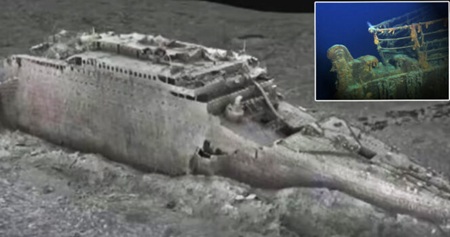
When the Titanic finally appeared on the remote cameras, Ballard described a powerful mix of awe and sorrow.
He famously said:
While Ballard’s team honored this promise, later expeditions did recover artifacts, further fueling global fascination with the Titanic.
But one thing was noticeably absent:
No human remains. Not a single bone.


